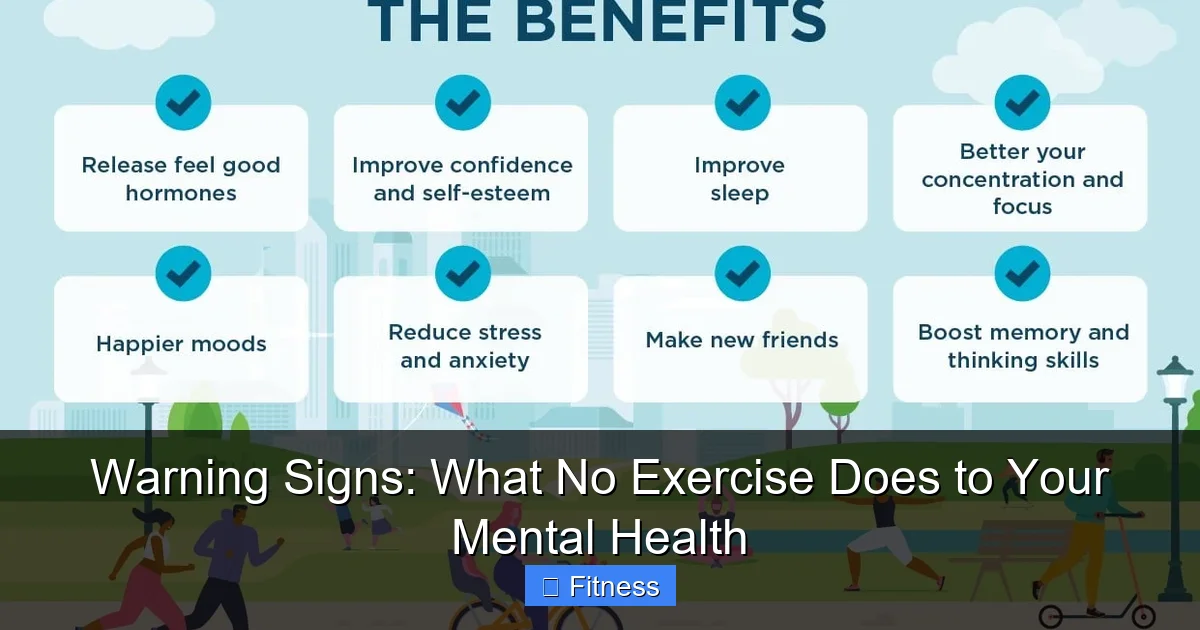
Our mental health is deeply intertwined with our physical activity. When you consistently engage in no exercise, your brain misses out on crucial mood-boosting chemicals, leading to a cascade of negative effects like increased anxiety, poor sleep, and reduced cognitive function. Understanding these warning signs is the first step towards reclaiming your mental well-being through movement.
Life in the modern world often feels like a non-stop sprint, leaving many of us exhausted, overwhelmed, and with little time for anything beyond the bare essentials. Amidst the endless to-do lists and digital distractions, one crucial element often gets pushed to the back burner: physical activity. We all know that exercise is good for our bodies – it helps us stay fit, manage our weight, and keeps our hearts healthy. But what about our minds?
The truth is, the link between physical movement and mental well-being is far more profound than many of us realize. Our brains are not separate from our bodies; they are deeply connected, and what affects one inevitably affects the other. When you actively choose to engage in no exercise, or simply allow it to fall by the wayside, you’re not just shortchanging your physical health; you’re setting the stage for a host of mental health challenges that can gradually creep into your life, often unnoticed until they become significant.
This article isn’t meant to guilt-trip you into hitting the gym. Instead, it’s an honest exploration of the very real warning signs that emerge when you consistently do not exercise for mental health. We’ll delve into the subtle shifts and overt struggles that can arise, helping you recognize these signals in yourself or those you care about. Understanding these connections is the first powerful step toward making informed choices that nurture both your body and your mind.
Key Takeaways
- Exercise is a Powerful Antidepressant: Regular physical activity stimulates the release of endorphins and neurotransmitters that improve mood and reduce feelings of depression and anxiety.
- Cognitive Decline is a Risk: A lack of exercise can impair cognitive functions like focus, memory, and problem-solving, making everyday tasks feel more challenging.
- Sleep Suffers Significantly: Without the physical exertion and mental clarity exercise provides, sleep patterns can become disrupted, leading to insomnia or poor quality rest.
- Stress and Anxiety Can Escalate: Physical activity acts as a natural stress reliever, helping to burn off excess adrenaline and cortisol. Without it, stress can build up, exacerbating anxiety.
- Energy Levels Plummet: Despite feeling tired, being sedentary actually depletes energy. Regular movement boosts stamina and reduces chronic fatigue.
- Social Connection Weakens: A decline in mental health due to inactivity can lead to social withdrawal, further isolating individuals and worsening mood.
- It’s Never Too Late to Start: Even small, consistent bouts of activity can begin to reverse these negative effects and significantly improve mental well-being.
Quick Answers to Common Questions
Can “no exercise” truly lead to depression?
Yes, prolonged periods of no exercise can significantly contribute to symptoms of depression, due to reduced levels of mood-regulating neurotransmitters and increased stress hormones. It’s not the sole cause, but a major contributing factor.
How quickly can I see mental health benefits from starting to exercise?
Many people report feeling better mentally even after a single session of moderate exercise due to the immediate release of endorphins. Consistent benefits, like improved mood and reduced anxiety, often become noticeable within a few weeks of regular activity.
What if I’m too tired or unmotivated to start exercising?
This is a common challenge, especially when experiencing the mental health effects of no exercise. Start incredibly small: a 5-minute walk, light stretching, or dancing to one song. Focus on creating a positive association with movement, rather than aiming for intense workouts immediately.
Does the type of exercise matter for mental health?
While all forms of physical activity offer mental health benefits, some people find specific types more effective. Aerobic exercises (like running or swimming) are great for endorphins, while mind-body practices (like yoga or tai chi) can reduce stress and improve focus. The best type is one you enjoy and can stick with.
Can exercise replace therapy or medication for mental health conditions?
No, exercise is a powerful complementary tool, not a replacement for professional mental health care. For conditions like clinical depression or severe anxiety, exercise should be used in conjunction with therapy, medication, or other treatments recommended by a healthcare provider.
📑 Table of Contents
- The Deep Connection: Body, Brain, and Mood
- Unpacking the Emotional Toll: Mood Swings and Irritability
- Cognitive Cloudiness: Impact on Focus and Memory
- The Spiral of Stress and Anxiety
- Sleep Disturbances and Energy Depletion
- Social Withdrawal and Loss of Motivation
- Reclaiming Your Mental Health: Practical Steps to Get Moving
- Conclusion
The Deep Connection: Body, Brain, and Mood
Let’s start by understanding why exercise is so vital for your brain’s health. When you move, your body isn’t just burning calories or building muscle; it’s triggering a complex symphony of biochemical reactions that directly impact your brain. Exercise increases blood flow to the brain, delivering more oxygen and nutrients. It also stimulates the release of powerful neurotransmitters like endorphins, serotonin, dopamine, and norepinephrine – often referred to as your brain’s natural “feel-good” chemicals.
Neurotransmitters: Your Brain’s Chemical Messengers
Endorphins are natural pain relievers and mood elevators, giving you that “runner’s high.” Serotonin helps regulate mood, sleep, appetite, and digestion. Dopamine is crucial for motivation, pleasure, and reward. Norepinephrine affects alertness and stress responses. When you engage in no exercise, your brain’s natural production and regulation of these essential chemicals can become sluggish. This isn’t just about feeling a little down; it’s about a fundamental shift in your brain’s chemistry that can have far-reaching effects on your emotional stability and cognitive function.
The Anti-Inflammatory Effect
Chronic inflammation in the body has been linked to various mental health disorders, including depression and anxiety. Regular exercise acts as an anti-inflammatory agent, helping to reduce systemic inflammation. When you consistently do not exercise, this protective effect is lost, potentially leaving your brain more vulnerable to the negative impacts of inflammation.
Unpacking the Emotional Toll: Mood Swings and Irritability
One of the most common and often overlooked warning signs of not exercising for mental health is a noticeable shift in your emotional landscape. Have you found yourself feeling unusually moody, easily annoyed, or experiencing rapid shifts in your emotional state? This might be a clear signal that your body and brain are missing the benefits of regular movement.

Visual guide about what happens if you do not exercise for mental health
Image source: expressfitness.co.za
Increased Irritability and Frustration
Without exercise, the built-up stress and tension in your body have no healthy outlet. This can lead to a shorter fuse. Small annoyances that you would normally shrug off might suddenly feel like major provocations. You might snap at loved ones, feel perpetually agitated, or find yourself getting easily frustrated by everyday tasks. This isn’t just a personality quirk; it’s often a direct result of your brain’s chemical imbalance when you engage in no exercise.
Persistent Low Mood and Apathy
A consistent lack of physical activity can contribute to feelings of sadness, despondency, and a general lack of interest in activities you once enjoyed. This isn’t necessarily full-blown depression, but it can be a precursor. The absence of endorphin boosts means fewer moments of natural joy and lightness. You might start feeling a sense of apathy, where nothing feels particularly exciting or worthwhile. This low-grade melancholy can persist, making it harder to break free from the sedentary cycle. Recognizing this as a warning sign of no exercise is crucial.
Tips for Boosting Mood Through Movement:
- Start Small: Don’t aim for a marathon. A 10-15 minute walk around the block can make a difference.
- Find Joyful Movement: Instead of focusing on “exercise,” think about activities you genuinely enjoy. Dancing, gardening, playing with pets, or even cleaning can count.
- Outdoor Activity: Combine exercise with exposure to nature. Sunlight and fresh air have their own mood-boosting properties.
Cognitive Cloudiness: Impact on Focus and Memory
Have you been struggling to concentrate at work, forgetting small details, or finding it harder to learn new things? If you’ve noticed a decline in your mental sharpness, it might be another significant warning sign of what happens when you do not exercise for mental health. Our brains thrive on activity, and a sedentary lifestyle can literally make your brain less efficient.

Visual guide about what happens if you do not exercise for mental health
Image source: images.squarespace-cdn.com
Reduced Concentration and Focus
When you consistently engage in no exercise, your brain’s capacity for sustained attention can diminish. You might find your mind wandering more often during conversations, struggling to complete tasks that require focus, or feeling a general “brain fog.” This is partly due to reduced blood flow to the brain’s prefrontal cortex, the area responsible for executive functions like planning and concentration.
Memory Impairment
Exercise has been shown to promote the growth of new brain cells in the hippocampus, a region critical for memory and learning. When there is no exercise, this neurogenesis slows down. You might start forgetting appointments, struggling to recall names, or finding it harder to retain new information. This isn’t just an inconvenience; it can impact your personal and professional life significantly. The impact of no exercise on your brain’s structure is real.
Difficulty with Problem-Solving and Creativity
Physical activity can stimulate divergent thinking and problem-solving abilities. It provides a mental break that often allows for new insights to emerge. When you do not exercise, you lose this natural creative catalyst. You might feel stuck on problems, unable to think outside the box, or find your creativity wanes, making complex tasks feel overwhelming.
Tips for Sharpening Your Mind with Movement:
- Break Up Sedentary Time: Stand up and move for 5 minutes every hour.
- Incorporate Mind-Body Exercises: Yoga or Tai Chi can improve focus and memory while providing physical benefits.
- Try “Active Thinking”: Go for a walk when you need to brainstorm ideas or solve a problem. The movement can help clear your head.
The Spiral of Stress and Anxiety
Stress is an inevitable part of life, but how we cope with it makes all the difference. Exercise is one of the most effective natural stress relievers. When you consistently do not exercise, your body loses its primary mechanism for processing and releasing stress hormones, leading to an amplification of anxiety and an increased feeling of being overwhelmed.
Heightened Stress Response
Physical activity helps to burn off excess cortisol and adrenaline, the hormones released during the body’s “fight or flight” response. Without this release, these hormones can linger in your system, keeping you in a state of heightened alert. This means you’re more likely to feel stressed by situations that might not normally bother you, and the stress can last longer. The chronic state of being on edge is a clear warning sign of no exercise.
Increased Anxiety and Worry
A sedentary lifestyle often correlates with higher levels of anxiety. The calming effect of exercise, which helps regulate the nervous system, is absent. You might find yourself worrying excessively, experiencing racing thoughts, or feeling a sense of dread without a clear cause. Panic attacks can become more frequent or severe for some individuals. The lack of structured physical activity means you’re missing a powerful tool for managing these anxious feelings.
Physical Manifestations of Stress
When you do not exercise, stress isn’t just mental; it manifests physically. You might experience chronic muscle tension, headaches, digestive issues, or a constant feeling of being wired but tired. These physical symptoms further compound the mental burden, creating a vicious cycle where discomfort and worry feed into each other.
Tips for Managing Stress and Anxiety with Movement:
- Mindful Movement: Focus on your breathing and body during exercise. This can act as a moving meditation.
- Consistent Routine: Even short, daily walks can create a sense of routine and predictability, which is calming.
- High-Intensity Intervals: For some, short bursts of intense exercise can be very effective at releasing pent-up stress. Listen to your body and consult a doctor first.
Sleep Disturbances and Energy Depletion
Have you been struggling to fall asleep, stay asleep, or waking up feeling utterly exhausted even after a full night in bed? Poor sleep and chronic fatigue are incredibly common warning signs when you consistently do not exercise for mental health. The irony is that while you might feel too tired to exercise, it’s often the lack of activity that’s contributing to your low energy and sleep problems.
Difficulty Falling Asleep and Insomnia
Exercise helps regulate your circadian rhythm, your body’s natural sleep-wake cycle. It can also help you feel pleasantly tired, making it easier to drift off. When you engage in no exercise, your body might not accumulate enough “sleep debt” during the day, making it harder to initiate sleep. Your mind might also be more active and prone to worrying, especially if stress and anxiety are already elevated due to inactivity.
Poor Quality Sleep
Even if you manage to fall asleep, the quality of your rest can suffer without regular physical activity. Exercise promotes deeper, more restorative sleep stages. Without it, your sleep might be lighter, more fragmented, and less effective at truly recharging your body and mind. You might wake up feeling groggy, unrested, and simply not ready to face the day.
Persistent Fatigue and Low Energy
It might seem counterintuitive, but being sedentary actually depletes your energy reserves. Regular exercise boosts your cardiovascular health, improves oxygen delivery to your cells, and enhances your body’s ability to produce energy. When you do not exercise, your body becomes less efficient at these processes, leading to chronic fatigue, sluggishness, and a general lack of vitality throughout the day. This isn’t just about feeling tired; it’s about a fundamental lack of energy that impacts every aspect of your life.
Tips for Better Sleep and Energy Through Movement:
- Timing is Key: Exercise earlier in the day if possible. Working out too close to bedtime can sometimes be stimulating.
- Consistency Over Intensity: Regular, moderate activity is more beneficial for sleep than sporadic, intense workouts.
- Listen to Your Body: If you’re feeling extremely fatigued, a gentle stretch or a short walk might be more appropriate than a strenuous workout.
Social Withdrawal and Loss of Motivation
One of the most insidious warning signs that you do not exercise for mental health is a gradual pull away from social interaction and a significant dip in overall motivation. This often creates a self-reinforcing cycle, where declining mental health leads to inactivity, which then worsens mental health and further reduces the desire to engage with the world.
Increased Social Isolation
When you’re struggling with low mood, anxiety, or fatigue (all common effects of no exercise), the thought of socializing can feel overwhelming. You might start declining invitations, avoiding social gatherings, or withdrawing from friends and family. This isolation further compounds negative feelings, as humans are inherently social creatures and thrive on connection. The absence of exercise can contribute to a downward spiral of social disengagement.
Lack of Motivation and Procrastination
Without the mood-boosting and energy-enhancing effects of exercise, it’s common to experience a significant loss of motivation. Tasks that once seemed easy might now feel monumental. You might find yourself procrastinating more, struggling to start or finish projects, and feeling a general sense of apathy towards your goals. This isn’t laziness; it’s often a direct consequence of your brain’s reduced dopamine and serotonin levels when you consistently do not exercise.
Loss of Interest in Hobbies and Activities
Similar to general motivation, a lack of physical activity can lead to a decreased interest in hobbies and passions that once brought you joy. Whether it’s reading, painting, playing music, or engaging in other creative pursuits, the mental fog and emotional flatness associated with no exercise can make these activities seem unappealing or too much effort. This further impoverishes your life and can deepen feelings of emptiness.
Tips for Reconnecting and Rekindling Motivation:
- Exercise with a Friend: Partnering up can provide accountability and make exercise more enjoyable and social.
- Set Small, Achievable Goals: Don’t overwhelm yourself. A 5-minute walk today is a victory.
- Connect Movement to Purpose: Think about how exercise helps you be a better friend, partner, or employee.
- Reward Yourself: Acknowledge your efforts with something enjoyable (not food-related) after you move.
Reclaiming Your Mental Health: Practical Steps to Get Moving
Recognizing these warning signs is the first crucial step. The good news is that the powerful connection between exercise and mental health means that even small, consistent changes can yield significant benefits. You don’t need to become an elite athlete overnight. The goal is sustainable movement that fits into your life.
Start with Micro-Movements
If the idea of a 30-minute workout feels daunting, start smaller. Take a 5-minute walk during your lunch break. Do a few stretches when you wake up. Stand up and move around every time you get a phone call. These micro-movements add up and can break the cycle of prolonged sitting. Remember, when you do not exercise, any movement is better than none.
Find What You Enjoy
The best exercise is the one you’ll actually do. Explore different activities until you find something that brings you joy. This could be dancing, hiking, cycling, swimming, yoga, martial arts, or even active video games. When exercise feels like play, you’re more likely to stick with it. The idea is to counteract the effects of no exercise by making movement enjoyable.
Integrate Movement into Your Daily Routine
Look for opportunities to be more active without needing a dedicated “workout” session. Take the stairs instead of the elevator. Park further away from the entrance. Walk or cycle for short errands. Do household chores with more vigor. These small shifts make a big difference in reducing the impact of no exercise.
Be Patient and Kind to Yourself
Changing habits takes time and effort. There will be days when you don’t feel like moving, and that’s okay. Don’t let one missed day derail your progress. Forgive yourself, and get back on track the next day. Focus on consistency over intensity, and celebrate every small victory. The goal is to consistently avoid the pitfalls of no exercise.
Consider Professional Guidance
If your mental health struggles are severe, or if you find it incredibly difficult to initiate movement, reaching out to a healthcare professional, therapist, or even a certified fitness trainer specializing in mental health can be incredibly beneficial. They can offer tailored advice and support to help you navigate these challenges.
Conclusion
The warning signs are clear: when you consistently do not exercise, your mental health can suffer profoundly. From mood swings and cognitive fog to heightened anxiety and chronic fatigue, the absence of physical activity impacts nearly every aspect of your psychological well-being. But the story doesn’t end there. Understanding these connections empowers you to take action.
By reintroducing movement into your life, even in small doses, you can begin to reverse these negative effects. Exercise isn’t just about looking good; it’s about feeling good, thinking clearly, managing stress effectively, and living a more vibrant, mentally resilient life. It’s a powerful tool, readily available to us, for nurturing our most precious asset: our mental health. So, listen to the warning signs, stand up, and take that first step towards a healthier, happier you. Your mind will thank you for it.
🎥 Related Video: Your Brain on Exercise: Instant Benefits
📺 Dr. Tracey Marks
Feeling stressed or foggy? A single workout can reset your brain. Try it and feel the difference—your mind will thank you!
Frequently Asked Questions
What are the primary neurotransmitters influenced by exercise that affect mental health?
Exercise primarily influences serotonin, dopamine, norepinephrine, and endorphins. These neurotransmitters play crucial roles in regulating mood, pleasure, motivation, stress response, and natural pain relief, all of which are vital for good mental health.
How does a lack of exercise impact cognitive functions like memory and focus?
When there is no exercise, reduced blood flow to the brain and decreased neurogenesis (the growth of new brain cells, especially in the hippocampus) can occur. This leads to impaired memory, difficulty concentrating, and a general feeling of “brain fog,” making cognitive tasks more challenging.
Can not exercising make me more prone to stress and anxiety?
Absolutely. Physical activity helps process stress hormones like cortisol and adrenaline. When you consistently do not exercise, these hormones can linger in your system, leading to a heightened stress response, increased feelings of anxiety, and a reduced capacity to cope with daily stressors.
Why does a sedentary lifestyle often lead to poor sleep and low energy?
A sedentary lifestyle disrupts the body’s natural circadian rhythm and reduces the accumulation of “sleep debt,” making it harder to fall asleep and achieve deep, restorative rest. Additionally, a lack of physical activity can lead to a less efficient cardiovascular system, resulting in persistent fatigue and lower overall energy levels.
Is it true that not exercising can impact my social life and motivation?
Yes, it’s a significant but often overlooked impact. The low mood, anxiety, and fatigue associated with no exercise can lead to social withdrawal and a decreased desire to engage with others. This, in turn, can reduce overall motivation, making it harder to pursue hobbies, goals, and maintain social connections, creating a negative cycle.
What’s the minimum amount of exercise I should aim for to support my mental health?
Even small amounts of consistent exercise can be beneficial. Health guidelines generally recommend at least 150 minutes of moderate-intensity aerobic activity or 75 minutes of vigorous-intensity activity per week, along with muscle-strengthening activities twice a week. However, starting with just 10-15 minutes of walking daily is a great first step to combat the effects of no exercise.