

Finding the right amount of exercise is crucial for optimal mental health. It’s not about extreme workouts, but about consistency, listening to your body, and discovering the balance that best supports your emotional well-being. This guide will help you personalize your fitness journey to genuinely boost your mood and reduce stress.
Hey there! Have you ever noticed how a good walk can clear your head, or how a tough workout can make you feel incredibly accomplished and calm afterward? It’s no secret that exercise is fantastic for our physical health, but what about our minds? The connection between getting active and feeling better mentally is powerful, and it’s a topic we’re all talking about more and more.
However, simply saying “exercise more” isn’t always the full answer, especially when it comes to mental well-being. Just like a delicate recipe, there’s a “right amount” – too little might not give you the benefits, but too much can actually add to your stress or lead to burnout. Finding this sweet spot, this right amount of exercise for improved mental health, is a personal journey, and it’s what we’re going to explore together today.
This article is all about helping you unlock the amazing benefits of physical activity for your mind, without falling into the trap of overdoing it. We’ll dive into how exercise positively impacts your brain, how to figure out what works best for you, and practical tips to make movement a consistent, joyful part of your mental wellness routine. Let’s get started on finding your perfect exercise balance for a happier, healthier mind!
Key Takeaways
- Balance is Key: More exercise isn’t always better for mental health; overtraining can cause stress. The goal is to find your unique “sweet spot” where physical activity positively impacts your mood and energy without leading to burnout.
- Start Small, Build Gradually: Begin with manageable exercise routines and slowly increase intensity or duration. This prevents injury, reduces psychological resistance, and builds sustainable habits for long-term mental health benefits.
- Diverse Exercise Types Matter: Incorporate a variety of activities beyond just cardio. Strength training, yoga, walking in nature, and mindful movement all offer distinct mental health advantages, from stress reduction to improved self-efficacy.
- Listen to Your Body and Mind: Pay close attention to how different types and amounts of exercise affect your mood, energy levels, and sleep. Use journaling or mood tracking to identify patterns and adjust your routine accordingly.
- Consistency Over Intensity: Regular, moderate exercise provides more sustained mental health benefits than sporadic, high-intensity workouts. Aim for frequent, enjoyable movement rather than pushing yourself to exhaustion.
- Prioritize Enjoyment and Personalization: Choose activities you genuinely like and that fit your lifestyle. When exercise is enjoyable, it becomes a sustainable practice that you’re more likely to stick with, leading to lasting mental well-being improvements.
- Seek Professional Guidance if Needed: If you’re struggling to find your balance or have underlying mental or physical health conditions, consult with healthcare providers, personal trainers, or mental health professionals for tailored advice.
Quick Answers to Common Questions
How much exercise is recommended for mental health?
Most guidelines suggest at least 150 minutes of moderate-intensity aerobic activity or 75 minutes of vigorous activity per week, plus two strength training sessions. However, the “right amount” is highly personal and depends on individual factors like fitness level, stress, and energy.
Can too much exercise be bad for mental health?
Yes, overtraining can lead to increased stress, anxiety, irritability, poor sleep, and a loss of motivation, negatively impacting mental health. It’s crucial to find a balance and incorporate adequate rest.
What types of exercise are best for reducing anxiety?
Activities that promote mindfulness and lower stress, such as yoga, Tai Chi, brisk walking (especially in nature), and moderate-intensity cardio, are particularly effective for reducing anxiety.
How quickly can exercise improve my mood?
You can often experience an immediate mood boost after even a short session, thanks to endorphin release. Consistent, regular exercise provides more sustained and long-term improvements in mood and overall mental well-being.
What if I don’t feel motivated to exercise?
Start small, choose activities you genuinely enjoy, and focus on the mental health benefits rather than just physical goals. Partnering with a friend or joining a class can also provide motivation and accountability.
📑 Table of Contents
- The Powerful Link Between Exercise and Mental Well-being
- More Isn’t Always Better: Understanding the “Right Amount”
- Finding Your Starting Line: Assessing Your Current Fitness and Mental State
- Types of Exercise for Mental Health: Beyond Just Cardio
- Listen to Your Body and Mind: The Art of Self-Monitoring
- Building a Sustainable Routine: Consistency is Key
- Conclusion
The Powerful Link Between Exercise and Mental Well-being
Before we jump into finding your ideal exercise routine, let’s take a moment to truly appreciate just how deeply exercise and mental health are intertwined. It’s not just a feeling; there’s real science backing it up! When you move your body, a cascade of positive changes happens inside your brain and body, directly impacting your mood, stress levels, and overall cognitive function.
Brain Chemistry Boost
One of the most well-known benefits is the release of feel-good chemicals. Exercise stimulates the production of endorphins, which are natural painkillers and mood elevators – think of them as your body’s natural “happy pills.” But it doesn’t stop there. Regular physical activity also helps regulate neurotransmitters like serotonin and norepinephrine, which play a crucial role in mood, anxiety, and sleep. For people dealing with depression or anxiety, maintaining healthy levels of these brain chemicals can make a significant difference. This is a key reason why finding the right amount of exercise for improved mental health is so vital.
Stress Reduction and Resilience
Ever feel less stressed after a run or a yoga session? That’s because exercise helps reduce levels of cortisol, the body’s primary stress hormone. It’s like a healthy way to “burn off” stress. Moreover, by putting your body through a controlled amount of physical stress, you actually train your nervous system to respond more effectively to other stressors in your life. This builds resilience, making you better equipped to handle daily challenges without feeling overwhelmed. It gives you a sense of control, which is incredibly empowering.
Improved Sleep Quality
Poor sleep can wreak havoc on your mental state, making anxiety worse and chipping away at your mood. Exercise, especially when done regularly and at the right time of day, can significantly improve sleep quality. It helps you fall asleep faster and enjoy deeper, more restorative sleep. Just remember to avoid intense workouts too close to bedtime, as that can sometimes have the opposite effect!
Enhanced Cognitive Function and Self-Esteem
Beyond mood, exercise also boosts brainpower. It improves memory, focus, and problem-solving skills by increasing blood flow to the brain and promoting the growth of new brain cells. And let’s not forget the psychological benefits: achieving fitness goals, no matter how small, builds self-efficacy and self-esteem. You prove to yourself that you are capable, strong, and committed, which can be a huge lift for your mental outlook.
More Isn’t Always Better: Understanding the “Right Amount”
Here’s where it gets interesting. While exercise is a mental health superpower, it’s crucial to understand that there’s a balance. Many people assume that if some exercise is good, then more must be better. Not necessarily! When it comes to the right amount of exercise for improved mental health, “more” can sometimes be detrimental.
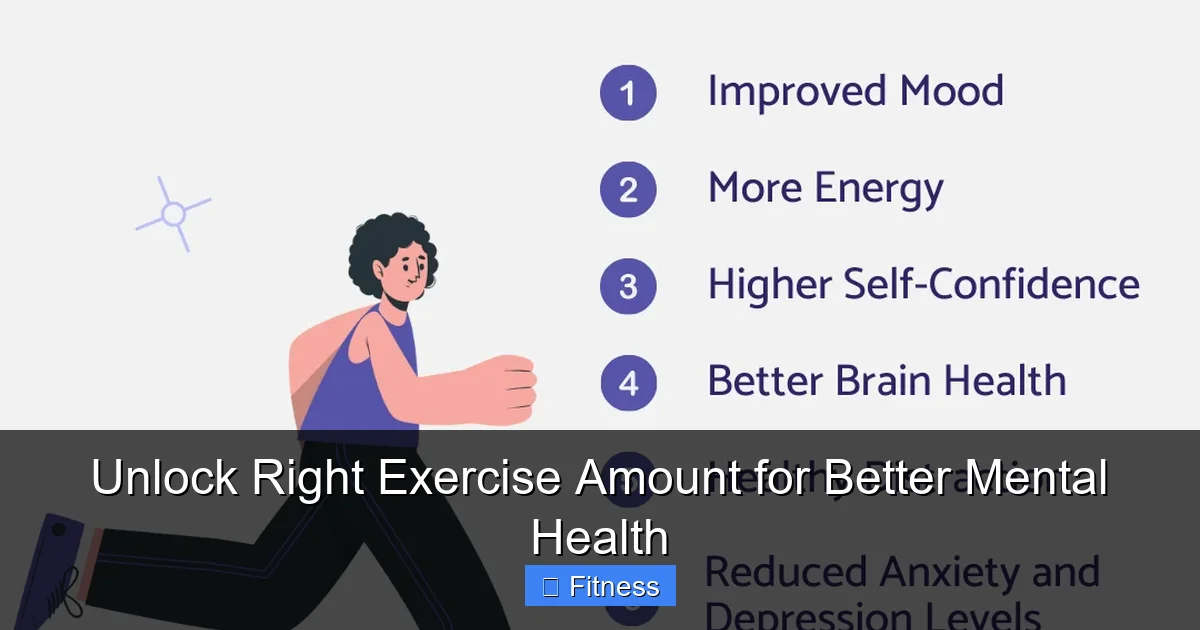
Visual guide about the right amount of exercise for improved mental health
Image source: assets-global.website-files.com
The Danger of Overtraining
Pushing your body too hard, too often, without adequate rest can lead to overtraining syndrome. Physically, this might manifest as persistent muscle soreness, fatigue, increased risk of injury, and even a weakened immune system. Mentally, overtraining can lead to irritability, mood swings, anxiety, depression, difficulty sleeping, and a loss of enthusiasm for exercise itself. Ironically, the very thing we’re using to boost mental health can, in excess, undermine it.
- Physical signs of overtraining: Chronic fatigue, increased resting heart rate, frequent illness, persistent soreness, diminished performance.
- Mental signs of overtraining: Irritability, anxiety, difficulty concentrating, mood swings, lack of motivation, disrupted sleep patterns.
Recognizing these signs is a vital part of finding your balance. The goal isn’t to punish your body; it’s to nurture it.
Finding Your Sweet Spot
The “right amount” isn’t a one-size-fits-all number. It’s a dynamic zone that depends on your current fitness level, stress levels, sleep quality, type of exercise, and personal preferences. For some, 30 minutes of moderate activity three times a week might be perfect. For others, an hour of mixed activities five days a week feels ideal. The key is to find the intensity and duration that leaves you feeling energized and positive, not drained and depleted.
Most guidelines suggest at least 150 minutes of moderate-intensity aerobic activity (like brisk walking, swimming, or cycling) or 75 minutes of vigorous-intensity activity (like running or high-intensity interval training) per week, plus two days of strength training. However, these are general guidelines. For optimal mental health benefits, you need to listen to your body and mind above all else.
Finding Your Starting Line: Assessing Your Current Fitness and Mental State
So, how do you begin this journey of finding the right amount of exercise for improved mental health? It starts with a honest assessment of where you are right now, both physically and mentally.

Visual guide about the right amount of exercise for improved mental health
Image source: nia.nih.gov
Self-Assessment: Where Are You Now?
Before you jump into a new routine, ask yourself a few questions:
- Physical Activity Level: How much do you currently move in a typical week? Are you mostly sedentary, or do you already have some activity built in?
- Current Mood and Energy: How do you generally feel on a day-to-day basis? Do you wake up refreshed, or are you often tired? Are you battling stress or anxiety?
- Existing Health Conditions: Do you have any physical limitations, injuries, or chronic health issues that might affect your ability to exercise? What about mental health conditions?
- Time Availability: How much time can you realistically dedicate to exercise each day or week, given your work, family, and other commitments?
- Preferences: What types of activities do you genuinely enjoy? What have you tried in the past that you liked or disliked?
Being honest with these answers will help you set realistic and achievable goals.
Start Small, Build Gradually
This is perhaps the most important piece of advice: start small. If you’re currently sedentary, don’t aim for an hour-long intense workout every day. That’s a recipe for burnout and disappointment. Instead, try starting with:
- Walking: Even 10-15 minutes of brisk walking a few times a week can make a huge difference.
- Light Stretching or Yoga: Just 5-10 minutes can improve flexibility and reduce tension.
- Short Bodyweight Circuits: A few squats, push-ups (on knees or against a wall), and planks for 10 minutes.
The goal at first isn’t to sweat profusely; it’s to build a habit and feel good about showing up. Once these small steps feel easy, then you can gradually increase the duration, intensity, or frequency. This gentle progression is key to sustainable change and long-term mental health benefits.
Consult a Professional
If you have any underlying health conditions, chronic pain, or significant mental health concerns, it’s always a good idea to chat with your doctor before starting a new exercise program. They can offer personalized advice and ensure your chosen activities are safe and appropriate for you. A physical therapist can help with injuries, and a personal trainer can guide you on proper form and progression, especially when trying to find the right amount of exercise for improved mental health.
Types of Exercise for Mental Health: Beyond Just Cardio
When most people think of exercise, they often picture running or hitting the gym. While these are great, the spectrum of activities that benefit mental health is much broader. Variety keeps things interesting and taps into different mental and physical benefits.
Aerobic Exercise (Cardio)
Activities that get your heart rate up and blood pumping are excellent for mental health. They’re fantastic for endorphin release, stress reduction, and improving sleep. Think:
- Brisk walking or hiking: Especially in nature, this combines physical activity with the benefits of green space.
- Running: A classic for a reason, but start slow if you’re new to it.
- Swimming: A full-body workout that’s gentle on joints and often has a meditative quality.
- Cycling: Indoors or outdoors, it’s a great way to build endurance and explore.
- Dancing: Fun, expressive, and a fantastic mood booster!
Aim for moderate intensity, where you can still hold a conversation but are slightly out of breath.
Strength Training (Resistance Training)
Don’t skip the weights! Strength training isn’t just for building muscles; it’s incredibly beneficial for mental health. It boosts self-confidence, improves body image, reduces anxiety, and enhances cognitive function. Plus, stronger muscles support your joints and make daily tasks easier, reducing physical stress. You don’t need a gym; bodyweight exercises (squats, lunges, push-ups, planks) are highly effective.
Mind-Body Practices
These types of exercise combine physical postures, breathing techniques, and mindfulness, making them uniquely powerful for mental well-being:
- Yoga: Improves flexibility, strength, and balance while reducing stress and anxiety through breath work and meditation. Different styles offer varying levels of intensity.
- Tai Chi: A gentle, low-impact exercise that involves slow, flowing movements. It’s excellent for balance, relaxation, and reducing stress.
- Pilates: Focuses on core strength, flexibility, and controlled movements, often promoting a sense of calm and body awareness.
These practices are superb for cultivating a deeper connection between your mind and body, which is essential when finding the right amount of exercise for improved mental health.
Outdoor Activities and Nature
Exercising outdoors, especially in green spaces, adds another layer of mental health benefits. “Green exercise” has been shown to reduce rumination, improve mood, and lower blood pressure more effectively than indoor exercise. Consider:
- Gardening: A low-impact way to be active and connect with nature.
- Hiking or Trail Walking: Combines cardio with beautiful scenery and fresh air.
- Outdoor sports: Tennis, basketball, ultimate frisbee – social interaction adds to the mental boost.
Even just spending time in a park can be incredibly rejuvenating.
Listen to Your Body and Mind: The Art of Self-Monitoring
This is where the “personal” part of finding your right amount of exercise for improved mental health truly comes into play. No expert can tell you exactly what feels right for you. You are your own best guide.
Pay Attention to Your Feelings, Not Just Calories Burned
Shift your focus from purely physical metrics (like calories, miles, or reps) to how exercise makes you feel. After a workout, do you feel:
- Energized and refreshed? Great! That’s a good sign you’re in your sweet spot.
- Calm and clear-headed? Excellent! Your stress hormones are likely lowering.
- Achieved and proud? Perfect! Your self-esteem is getting a boost.
- Exhausted, irritable, or achy for days? This might be a sign you’re doing too much, too often, or too intensely.
- Still anxious or restless? Perhaps you need to adjust the type or timing of your activity.
Your mental state before, during, and after exercise is a crucial indicator. Journaling can be a powerful tool here. Jot down your mood, energy levels, and how well you slept each day, along with your exercise for that day. Over time, you’ll start to see patterns and understand what truly benefits you.
Be Flexible and Adjust
Your “right amount” isn’t static. It will likely change based on your life circumstances. Are you going through a particularly stressful period at work? Dealing with a cold? Getting less sleep than usual? On these days, it’s okay – and often beneficial – to scale back your workout, choose a gentler activity, or even take a rest day. Pushing through when your body and mind are already depleted is rarely helpful for mental health. Self-compassion is key.
On the flip side, if you’re feeling great and have more energy, you might be able to comfortably increase your activity level a bit. The art is in staying attuned to your internal signals and responding with kindness.
Rest and Recovery are Non-Negotiable
Just as important as activity is rest. Your muscles need time to repair, and your mind needs time to unwind. Incorporating rest days, active recovery (like light stretching or walking), and ensuring adequate sleep are vital components of any exercise routine aimed at improving mental health. Recovery allows your body and mind to fully reap the benefits of your hard work.
Building a Sustainable Routine: Consistency is Key
The biggest mental health benefits from exercise come from consistency, not intensity. A moderate routine you stick with is far more effective than an intense one you abandon after two weeks. Here’s how to build a routine that lasts and helps you find the right amount of exercise for improved mental health.
Schedule It Like an Important Appointment
Treat your exercise time as non-negotiable. Put it on your calendar. Whether it’s 20 minutes in the morning, a lunchtime walk, or an evening yoga class, committing to a specific time slot makes it much harder to skip. Consistency builds habits, and habits reduce the mental effort required to start.
Find Your “Why”
Why are you exercising? Is it to reduce anxiety? Boost your mood? Improve sleep? Connect with friends? When you understand your deeper motivation, it becomes easier to stay committed, especially on days when you don’t feel like it. Remind yourself of the mental health benefits you seek.
Make It Enjoyable
If you hate running, don’t force yourself to run! There are countless ways to be active. Explore different activities until you find something you genuinely look forward to. This might be:
- Team sports: Volleyball, soccer, basketball.
- Classes: Spin, Zumba, martial arts.
- Outdoor adventures: Rock climbing, kayaking, cycling trails.
- Home workouts: Follow online videos for dance, strength, or yoga.
When exercise is fun, it doesn’t feel like a chore, and you’re far more likely to maintain consistency.
Incorporate Movement Throughout Your Day
Beyond dedicated workouts, look for opportunities to add movement to your daily life. Every little bit counts towards finding the right amount of exercise for improved mental health.
- Take the stairs instead of the elevator.
- Park further away from your destination.
- Stand up and stretch during breaks from work.
- Walk or cycle short distances instead of driving.
- Do some squats while waiting for the kettle to boil.
These small bursts of activity add up and prevent prolonged periods of sitting, which is beneficial for both physical and mental health.
Seek Accountability and Support
Sometimes, a little external motivation can go a long way. This could mean:
- Working out with a friend: You’re less likely to cancel if someone else is relying on you.
- Joining a group class or club: The social aspect can be a huge motivator.
- Using a fitness tracker or app: Seeing your progress can be encouraging.
- Sharing your goals: Tell a supportive family member or friend about your intentions.
Conclusion
Finding the right amount of exercise for improved mental health is a deeply personal and evolving process. It’s not about achieving a specific physique or performing at an elite level; it’s about discovering what makes your mind feel calm, clear, and energized. Remember, your body and mind are in constant conversation, and listening to their cues is the most powerful tool you have.
Start where you are, be patient and kind to yourself, and embrace the journey of exploration. Experiment with different types of activities, pay attention to how they impact your mood and energy, and don’t be afraid to adjust your routine as your needs change. By making consistent, enjoyable movement a priority, you’re not just investing in your physical health – you’re building a stronger, more resilient foundation for your mental well-being. So, go ahead, take that first step, and unlock the incredible power of exercise for a healthier, happier you!
🎥 Related Video: Neuroscientist explains the best exercise to improve brain function
📺 Insider Tech
The author of “Healthy brain, Happy Life” and professor at the Center for Neural Science at New York University, Dr. Wendy …
Frequently Asked Questions
How does exercise reduce stress?
Exercise effectively reduces stress by lowering the body’s stress hormones, like cortisol and adrenaline. It also releases endorphins, which have mood-boosting and pain-relieving effects, creating a sense of calm and well-being after physical activity.
Is it better to exercise indoors or outdoors for mental health?
While both are beneficial, exercising outdoors, especially in green spaces like parks or nature trails, offers additional mental health advantages. Exposure to nature can further reduce stress, improve mood, and decrease rumination more effectively than indoor exercise.
Can exercise help with sleep problems related to mental health?
Yes, regular exercise can significantly improve sleep quality, which is often intertwined with mental health challenges. It helps regulate sleep-wake cycles, reduces the time it takes to fall asleep, and promotes deeper, more restorative sleep, indirectly improving mood and reducing anxiety.
How can I tell if I’m overtraining for mental health purposes?
Signs of overtraining that impact mental health include persistent fatigue despite adequate rest, increased irritability or anxiety, difficulty concentrating, disrupted sleep, and a general loss of enthusiasm or motivation for exercise. Pay attention to how you feel mentally before, during, and after your workouts.
Should I consult a doctor before starting a new exercise routine for mental health?
It’s always a good idea to consult your doctor, especially if you have existing health conditions, chronic pain, or significant mental health concerns. They can provide personalized advice and ensure your chosen exercise plan is safe and appropriate for your individual needs.
What if I only have a short amount of time for exercise?
Even short bursts of activity, like 10-15 minutes of brisk walking or a quick bodyweight circuit, can provide meaningful mental health benefits. Consistency is more important than duration, so aim for frequent, manageable sessions that you can easily incorporate into your daily routine.